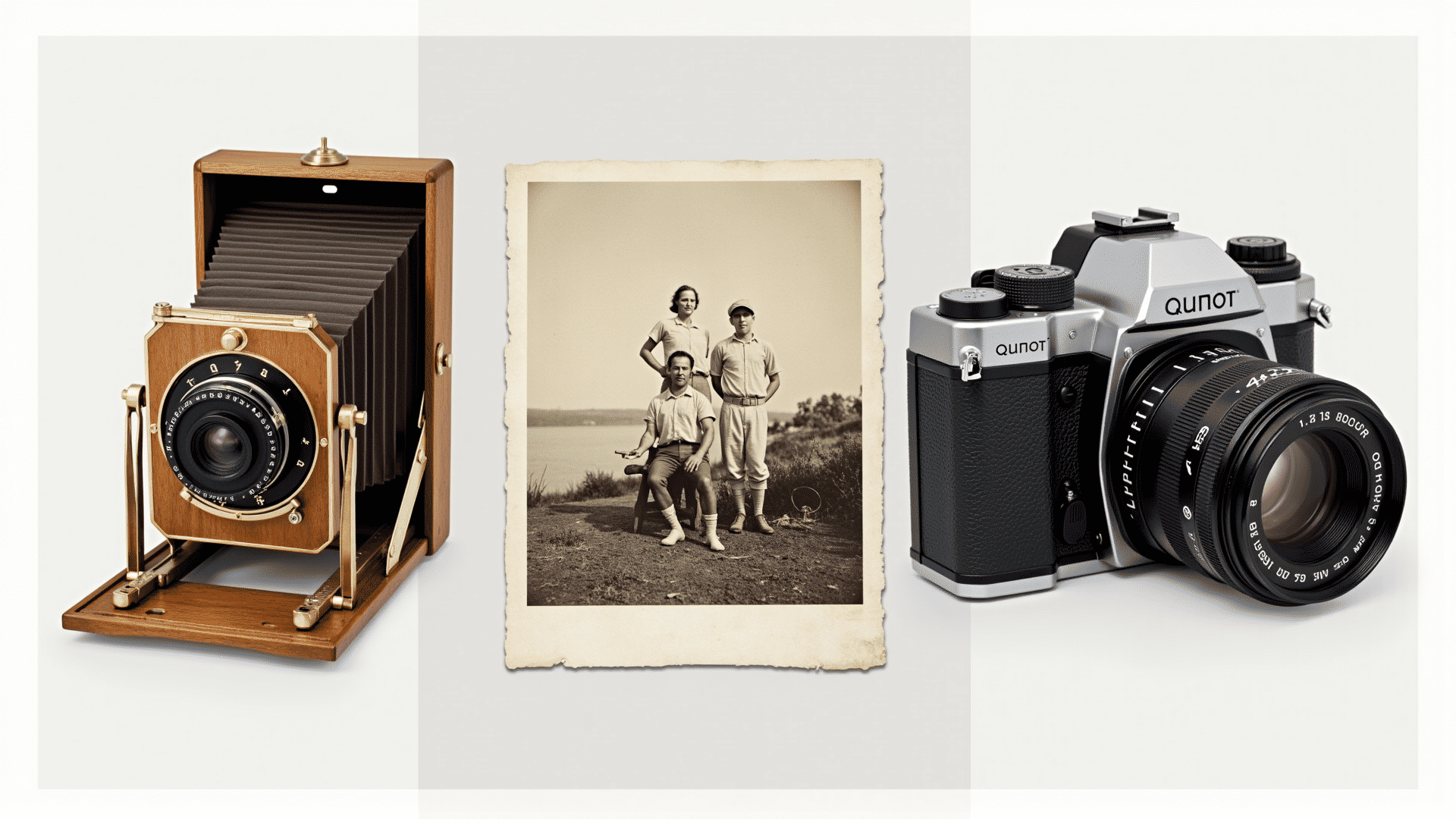
The history of photography is a captivating journey that marks a profound transformation in how humanity perceives the world. From its inception in the 19th century to the onset of the digital age, photography has revolutionized the documentation of memories and the articulation of artistic vision.
The journey began with an intriguing intersection of science and art, culminating in the Daguerreotype's invention in 1839 by Louis Daguerre. This process, which produced images on a polished silver-plated sheet of copper, was revolutionary for its time, capturing remarkable detail but requiring long exposure times and intricate chemical treatments. Despite these challenges, it swiftly gained popularity, becoming the first form of photography accessible to the public, and heralding the start of an era where capturing reality became possible.
In the subsequent decades, innovations came thick and fast. The introduction of film in the late 19th century was a game-changer, thanks largely to George Eastman and his Kodak camera. With the slogan "You press the button, we do the rest," Eastman simplified photography, making it easier and more accessible to the general populace. This democratization of photography allowed more people than ever before to document their lives, bringing a personal and intimate dimension to the art form.
The 20th century ushered in more advancements, including color photography, which broke free from the constraints of monochromatic images and brought life to photographs in ways previously unimagined. The introduction of 35mm film further transformed the landscape, enabling easier handling and the production of a more diverse range of cameras. This period also saw the rise of iconic photojournalism, with pioneering artists using the medium to document significant historical events, shaping public perception and engaging audiences worldwide.
Toward the end of the century, the digital revolution forever altered the photographic landscape. The transition from chemical processes to digital technology began in earnest in the 1980s and 1990s, fundamentally changing how photographs were taken, processed, and shared. With digital cameras and smartphones, photography became virtually instantaneous, enabling anyone with a phone to become a photographer. The rise of social media transformed photo-sharing into a daily routine, connecting people across the globe in a visual dialogue unseen in previous generations.
Today, photography continues its evolution, driven by advances in technology like artificial intelligence and virtual reality. These groundbreaking tools allow for extraordinary manipulation of images and offer new challenges and opportunities for creativity and storytelling.
The evolution of photography mirrors broader shifts in society and technology, documenting the mundane and the monumental with equal clarity. As we stand at the intersection of past achievements and future possibilities, photography remains a vital medium, continuously reinventing itself while maintaining its core mission of capturing the essence of life.